Quick answer
Bifacial panels also collect reflected light on their back side, so they can produce more where the surface below is bright; TOPCon is an n-type cell technology. Standard mono panels cost less and suit simple rooftops.
On this page: Three labels, three different questions · Mono PERC and TOPCon: what changes inside the cell · Bifacial and dual-glass: how rear gain really works · Mono vs bifacial TOPCon solar panels: comparison table · Worked example: mono vs bifacial TOPCon solar panels on a 5 kWp home roof · How to read a datasheet before you compare mono vs bifacial TOPCon solar panels · Which panel for which roof · Common mistakes to avoid · Frequently asked questions · Deciding on mono vs bifacial TOPCon solar panels
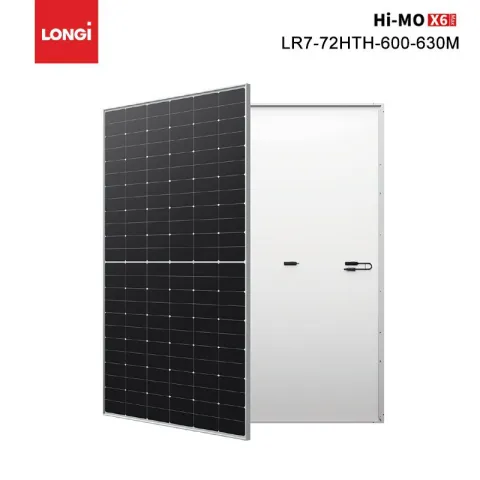
When people ask us about mono vs bifacial topcon solar panels, the plain answer is this: “mono” describes the type of silicon crystal, “TOPCon” describes the cell design inside the panel, and “bifacial” describes whether the panel can collect light on its back as well as its front. They are not three rival products. Most panels you will be offered today are monocrystalline, many newer ones use TOPCon cells, and many TOPCon models are also bifacial.
So the real question is which combination suits your roof, your budget and your expectations. In this guide we explain each label in everyday language, show how much extra energy a rear side might really add on a Bangladeshi rooftop, walk through a worked example, and give you a short checklist for reading a datasheet. We will stay honest about what varies, because a lot of marketing in this area gets carried away.
Three labels, three different questions
It helps to separate the words before comparing anything. Think of a panel as a sandwich, and each label answers a different question about it.
- Mono (monocrystalline) answers: what is the silicon made of? A single continuous crystal, cut into wafers. This is the standard for almost all quality rooftop panels now.
- PERC or TOPCon answers: how is the cell built? These are two cell designs, each with its own way of reducing electrical losses inside the cell.
- Bifacial answers: can the panel use light that hits the back? A bifacial panel has a see-through or cell-exposed rear, often with glass on both sides (dual-glass).
That is why the phrase mono vs bifacial topcon solar panels can confuse people. You are not choosing one over another in a straight line. You are choosing a cell type, and separately choosing whether the back side works.
If you are still working out how many panels your home needs at all, read our guide to how many solar panels a 5kW system needs first, then come back here to pick the type.
Mono PERC and TOPCon: what changes inside the cell
Mono PERC: the dependable workhorse
PERC stands for Passivated Emitter and Rear Cell. In simple words, the cell has an extra layer at the back that bounces unused light back into the silicon and reduces electrical losses. For years this was the mainstream design, and it is still widely sold.
Mono PERC panels are typically P-type, meaning the silicon is doped (given a tiny controlled impurity) with boron. P-type cells can suffer light-induced degradation, a small loss of output in the first hours or days of sunshine. This is normal and is already allowed for in the datasheet’s power warranty.
In practice mono PERC is a solid, proven choice. It is often the lower-priced option, and for a small home system with limited budget it can be exactly the right call. Nothing is wrong with it. The point is only that newer designs can do slightly better in some conditions.
TOPCon: a newer cell design
TOPCon stands for Tunnel Oxide Passivated Contact. The cell has a very thin oxide layer plus a doped silicon layer that lets electrons pass through while blocking the ones that would be lost. If you enjoy the engineering, there is a short Wikipedia article on TOPCon, though you do not need it to make a good decision.
Most TOPCon panels use N-type silicon, doped with phosphorus rather than boron. In general, and this is a general statement you should confirm on each datasheet, N-type panels show:
- Lower first-year degradation, since they are less prone to the light-induced loss mentioned above.
- A better temperature coefficient, meaning output drops a little less as the panel heats up.
- Slightly higher efficiency per square metre in many models, which matters when roof space is tight.
The temperature point deserves attention here. Bangladeshi roofs get hot, and panel surfaces can run far hotter than the air. A panel’s temperature coefficient tells you the percentage of power lost for every degree Celsius above 25. A smaller loss figure is better. Compare that number across datasheets rather than trusting a slogan.
We do not quote warranty years or efficiency percentages for specific brands in this article. Those change between models and over time, so check the current datasheet for any panel you consider.
Bifacial and dual-glass: how rear gain really works
A bifacial panel collects sunlight on the front, as usual, and also collects light that reflects off the ground or roof and reaches the back. Most bifacial panels are built with glass on both sides, which is why you will also hear the term dual-glass. The extra output from the rear is called rear-side gain, and it is the part that gets exaggerated most.
For mono vs bifacial topcon solar panels, rear gain is the number to treat with the most care, and it depends on three things:
- How reflective the surface under the panel is. Reflectance is called albedo. A white membrane or whitewashed roof reflects a lot. Dark concrete, bitumen or a roof covered in dust reflects very little.
- How high the panels are mounted. A panel raised well above the surface lets reflected light spread across its back. A panel close to the roof, or tilted flat on a low frame, sees much less.
- How much shade falls on the back. Mounting rails, water tanks and the structure itself can block the rear.
On ordinary rooftops with typical tilt and a medium-to-dark surface, the rear-side gain is modest. A cautious planning range is somewhere around 3 to 10 percent extra energy, and it can be lower or higher depending on the roof and the mounting. Large ground-mounted fields over bright, reflective ground do better, but that is a different situation from a flat in Dhaka.
Dual-glass construction has side benefits that are separate from rear gain. Glass-glass panels are often considered more resistant to moisture and mechanical stress, which can matter in humid, coastal or industrial air. Again, treat this as a general tendency and verify the construction details on the datasheet.
Mono vs bifacial TOPCon solar panels: comparison table
The table below puts the common options side by side, which is the quickest way to see where mono vs bifacial topcon solar panels differ. The words “typically” and “often” are deliberate; individual models differ.
| Feature | Mono PERC (monofacial) | N-type TOPCon (monofacial) | Bifacial TOPCon (dual-glass) |
|---|---|---|---|
| Cell type | P-type PERC | N-type TOPCon | N-type TOPCon, usually |
| Rear side collects light? | No | No | Yes |
| First-year degradation | Typically a bit higher | Typically lower | Typically lower |
| Temperature behaviour | Good | Often better | Often better |
| Extra energy from the back | None | None | Modest on rooftops, varies widely |
| Weight and handling | Lighter | Similar to PERC | Often heavier because of rear glass |
| Price | Usually lowest | Usually a little higher | Usually a little higher still |
| Best placed | Tight budget, small roofs | Hot roofs, limited space | Light-coloured or raised installations |
Read the table across rather than down. A panel can be N-type TOPCon and still be single-sided, and a bifacial panel on a dark, low-mounted roof may deliver little more than its monofacial cousin. Brands such as Jinko Solar and LONGi sell several of these variants, so always match the exact model code, not just the brand name.
Worked example: mono vs bifacial TOPCon solar panels on a 5 kWp home roof
Let us put numbers on a typical home project, so the mono vs bifacial topcon solar panels debate has some arithmetic behind it. Suppose you want about 5 kWp (kilowatt-peak, the rated output of the whole array under standard test conditions).
Step 1: count the panels
Pick a 620 W panel. A panel of this class is commonly around 2.4 m by 1.1 m, so about 2.7 square metres each.
- Panels needed = 5,000 W / 620 W = 8.06, so 8 panels.
- Actual array size = 8 x 620 W = 4,960 W = 4.96 kWp.
- Roof area = 8 x 2.7 = about 21.6 square metres, before gaps and walkways.
Step 2: estimate energy from the front
Use the rule of thumb of 3.5 to 4.5 kWh per kWp per day after real-world losses.
- Low case: 4.96 x 3.5 = 17.4 kWh per day.
- High case: 4.96 x 4.5 = 22.3 kWh per day.
- Middle: 4.96 x 4.0 = 19.8 kWh per day.
Step 3: add a cautious rear gain
Assume the panels are bifacial. On a dark roof with low mounting we take 3 percent; on a white membrane roof with a raised frame we take 8 percent. These are planning assumptions, not guarantees.
- Dark roof: 19.8 x 0.03 = 0.6 kWh extra per day.
- White raised roof: 19.8 x 0.08 = 1.6 kWh extra per day.
Step 4: turn it into a yearly figure
- 0.6 x 365 = about 219 kWh a year.
- 1.6 x 365 = about 584 kWh a year.
Now the decision rule: bifacial pays off only if the extra energy, valued at what you pay for electricity, covers the price premium over a few years. As a simple payback formula, years = extra cost / (extra kWh per year x value of each kWh). Purely to show the arithmetic, value a kWh at Tk 10. On the white roof that is 584 x 10 = Tk 5,840 per year; on the dark roof it is 219 x 10 = Tk 2,190. Put in your own electricity rate and your actual quoted price difference, and you will see quickly whether bifacial makes sense for you.
Notice what this shows. On a dark rooftop the bifacial benefit is small, so a good monofacial N-type panel can be the smarter buy. On a bright, raised installation the same upgrade can be worth it. For wider budgeting, our guide to solar system price in Bangladesh shows how panels fit into the total cost.
How to read a datasheet before you compare mono vs bifacial TOPCon solar panels
You do not need an engineering degree. When you compare mono vs bifacial topcon solar panels, check these lines in order.
- Rated power (Wp). Make sure you compare like with like, for example both at 620 W.
- Module efficiency. Higher means more watts per square metre. It matters most when roof space is the limit.
- Temperature coefficient of Pmax. A smaller negative number is better on hot roofs.
- Degradation figures. Look for first-year loss and yearly loss afterwards. Compare the datasheets side by side; do not rely on a salesperson’s summary.
- Bifaciality factor. For bifacial panels this shows how well the back converts compared with the front. It is not the same as the rear gain you will actually see.
- Weight and dimensions. Bifacial dual-glass panels can be heavier, so check the roof structure and the mounting frame.
- Warranty terms. Read both the product warranty and the performance warranty, and who handles claims locally. Our warranty page explains how GPTECH handles this.
You can also put models next to each other using our product comparison tool.
Which panel for which roof
Here is a practical way to settle mono vs bifacial topcon solar panels, by situation rather than by theory.
Small flat roof, dark surface, limited budget
A quality mono panel, PERC or N-type, mounted on a standard frame. Bifacial adds little here, so keep the money for a better inverter or battery.
Hot roof with limited space
N-type TOPCon makes sense. Higher efficiency lets you fit more watts in the same area, and the better temperature behaviour helps through the long summer.
White membrane roof or raised mounting
Bifacial TOPCon is worth a serious look. The rear side has something to work with, and you can raise the frame a little to help.
Factory or large commercial roof
Large sheds often have light-coloured or reflective roofing, and a small percentage gain on a big array adds up. Run the payback formula above with the actual price difference. For the bigger picture of three-phase systems see our article on rooftop solar for factories.
Coastal, humid or dusty sites
Construction quality matters more than the label. Look at the frame, glass, sealing and the supplier’s support. Panels in dusty places need regular cleaning whatever the type.
You can browse the whole range on our solar panels page, including models from Canadian Solar, Jinko, LONGi, JA Solar, Trina and Astronergy in the 550 W to 730 W class.
Installation details that decide whether the extras pay off
Even a good panel can underperform when it is badly installed. Tilt angle, row spacing and shading change the result more than most people expect.
For bifacial panels in particular, avoid placing cable trays, metal bars or water tanks right behind the panels. Keep the back side open to the sky and the roof. If you are going for the white membrane gain, the surface should be clean and in good shape, and a layer of dust will quietly eat into the benefit.
Also think about weight and wind. Dual-glass panels can be heavier, and Bangladesh sees strong winds in storm season. The mounting structure must be designed for the panel’s weight and for local wind loads. A site visit, as described on our installation and site survey page, checks these details before anything is ordered.
Finally, remember that the inverter must match the array. Higher-current modern panels need an inverter whose input range can handle them, so confirm compatibility before buying either part.
Common mistakes to avoid
Most regrets about mono vs bifacial topcon solar panels come from a handful of avoidable slips.
- Paying a premium for bifacial on a dark, low roof. The rear gain may be too small to repay the extra cost. Work through the formula first.
- Believing a headline rear-gain percentage. Figures from ideal ground-mount tests rarely apply to rooftops. Treat them as best-case.
- Comparing different wattages and calling one cheaper. Compare cost per watt, not cost per panel.
- Assuming TOPCon is always bifacial, or bifacial always TOPCon. Check each model code.
- Ignoring weight and frame strength. Heavier dual-glass panels need a suitable structure.
- Forgetting shade. A small shadow from a water tank can cost more energy than any cell upgrade can earn back.
- Skipping the warranty fine print. Know who answers the phone if something fails in year six.
- Letting dust build up. A dirty panel loses output, and on bifacial setups a dirty roof surface cuts rear gain as well.
Frequently asked questions
Is TOPCon better than mono PERC?
In general, TOPCon panels offer lower early degradation and better behaviour in heat, and often a little higher efficiency. Mono PERC remains a reliable and usually cheaper option. The right choice depends on your price difference and available roof space.
Are bifacial solar panels worth it for a home roof?
Sometimes. If your roof is light-coloured and the panels sit well above it, the extra energy from the back can justify a modest premium. On a dark, low-mounted roof the gain is usually small. Use the payback formula with your own numbers.
How much extra power do bifacial panels produce?
It varies a lot. On ordinary rooftops a cautious planning range is about 3 to 10 percent, depending on roof colour, mounting height and shade. Do not expect the top-end figures from open-ground installations.
Do bifacial panels work on a dark roof?
Yes, they still work as normal panels from the front, and they pick up a little light at the back. They simply gain less than they would over a bright surface.
What is an N-type solar panel?
N-type refers to the silicon being doped with phosphorus instead of boron. N-type cells are less affected by the early light-induced loss that some P-type cells show. Most TOPCon panels are N-type.
Do I need a special inverter for bifacial panels?
No special inverter type, but the inverter must handle the array’s voltage and current, including any extra current from the rear side. Check the input limits, and choose from our solar inverters with your installer.
Do bifacial panels last longer than normal panels?
Not automatically. Glass-glass construction may resist moisture and stress better, but lifespan depends on the specific model, installation quality and care. Compare product and performance warranties on the datasheet.
Which is better for Bangladesh, mono or bifacial?
In the mono vs bifacial topcon solar panels question, mono is the base technology in both. Whether you add TOPCon or bifacial depends on roof colour, heat, space and budget. For many homes, a good N-type monofacial panel is a sensible middle path; bifacial suits bright, raised or large commercial installations.
Deciding on mono vs bifacial TOPCon solar panels
To close the mono vs bifacial topcon solar panels question: choose mono as your base, add TOPCon if heat and roof space are tight or you want lower early degradation, and add bifacial only when your roof surface and mounting can actually feed the rear side. Compare datasheets for the exact models, and run the simple payback sum with your own price difference.
If you would like a second opinion, call +880 1712-567878 or message GPTECH on WhatsApp for a free site survey and quotation. We supply genuine, warranty-backed panels and inverters, with delivery across Bangladesh, and we are happy to explain the options before you commit.
Frequently asked questions
What does bifacial mean?
A bifacial panel can generate power from light reaching its back side as well as its front, for example light reflected from a bright roof or ground.
What is TOPCon?
TOPCon is a cell technology built on n-type silicon. Panels using it are often listed with higher module efficiency.
Do bifacial panels always produce more?
The extra output depends on how much light reaches the back, which depends on the surface and mounting height. Flat, white or bright surfaces help.
What should I compare?
Wattage, module efficiency, warranty and size, then the price per watt.
Related products
-
Jinko Solar
Jinko 750W Bifacial With Dual Glass Solar Panel
৳14,850 In stock -
LONGi
LONGi 615W Mono Solar Panel (SREDA approved)
৳12,177 In stock -
LONGi
LONGi 640W Mono Solar Panel
৳12,672 In stock -
Jinko Solar
Jinko 740W Bifacial With Dual Glass Solar Panel
৳14,652 In stock