Quick answer
To apply for net metering in Bangladesh, you need a three-phase connection, a grid-connected inverter of an approved model and a system within your sanctioned load limit. Apply to your distributor, pass inspection, sign the agreement and get a bidirectional meter.
On this page: What net metering is · Who can apply · How big a system you can connect · Equipment you need · Documents · Step-by-step process · Timeline and costs · Reading your bill · Worked example · Homes vs businesses · Common problems · Is it worth it? · FAQ
To apply for net metering in Bangladesh, you install a grid-connected rooftop solar system with an approved on-grid or hybrid inverter, then apply to your electricity distributor, such as DPDC, DESCO, BREB’s Palli Bidyut Samity, BPDB, NESCO or WZPDCO. The distributor inspects the system, signs an agreement with you and fits a bidirectional meter, after which surplus solar power you send to the grid is credited against what you take from it.
That is the outline. In practice, the process trips people up at a few predictable points: eligibility, system size, the inverter model and paperwork. This guide walks through each step as it works today, based on the government’s Net Metering Guideline and our experience helping customers through it. Rules and forms can change, so treat this as a practical map and confirm the latest details with your distributor and SREDA before you start.
What net metering is, in plain words
A normal electricity meter only counts power flowing into your building. A net meter, also called a bidirectional meter, counts both directions: power you import from the grid and solar power you export to it when your panels produce more than you are using.
At billing time, the distributor works out the difference. If you imported more than you exported, you pay for the net amount. If you exported more, the surplus is carried forward as a credit, with a settlement arrangement set out in the guideline and your agreement. The result is that your rooftop solar can lower your bill even during hours when you are not at home to use the power.
Net metering in Bangladesh is governed by the Net Metering Guideline issued in 2018 by the Power Division, with SREDA (the Sustainable and Renewable Energy Development Authority) overseeing renewable energy policy and providing a national solar help desk. The guideline has been amended since, and our earlier article explains how net metering pays back a rooftop solar system in more detail.
Who can apply for net metering?
The guideline was amended in 2019 to cover all three-phase electricity consumers: homes, offices, shops, factories and institutions with a three-phase connection. This is the first thing to check, because many flats in Bangladesh have a single-phase connection.
- Three-phase connection: you can apply, subject to the other conditions below.
- Single-phase connection: net metering has generally not been available. Ask your distributor whether the current rules allow it, or whether upgrading to three-phase makes sense for your building.
- Tenants: you will normally need the building owner’s written consent, because the system sits on the owner’s roof and the meter is linked to the connection.
- Apartment buildings: rooftop systems often connect to the building’s common meter, which needs agreement from the owners’ association.
Your connection type is printed on your electricity bill, and the meter itself shows whether it is single or three phase.
How big a solar system can you connect?
The guideline links the maximum solar capacity to your sanctioned load, the load approved for your connection and shown on your bill. Under the original rules, the solar capacity was capped at 70 percent of the sanctioned load, so a building with a 50kW sanctioned load could connect up to 35kW of solar. A 2025 revision has been reported to raise this to 100 percent of the sanctioned load. Because limits like this are revised from time to time, confirm the current figure with your distributor before you finalise the design.
Two other practical limits apply:
- Roof space. A modern 600W to 720W panel needs roughly 2.5 to 3.2 square metres including spacing. Many Dhaka rooftops run out of space before they reach the regulatory limit.
- Your consumption. Net metering rewards systems sized to your own use. A system much larger than your annual consumption builds up credit you may not be able to use fully.
The equipment you need
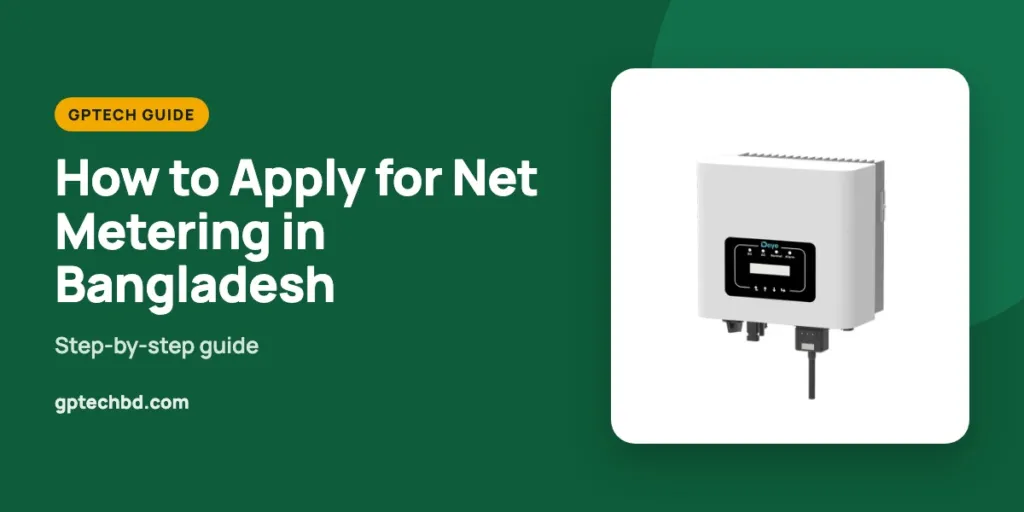
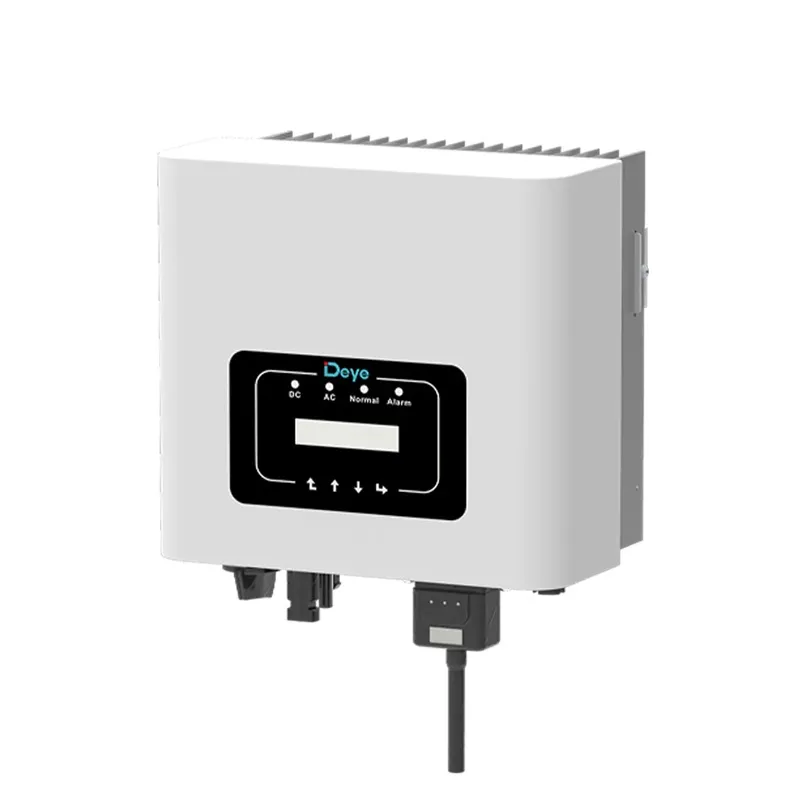
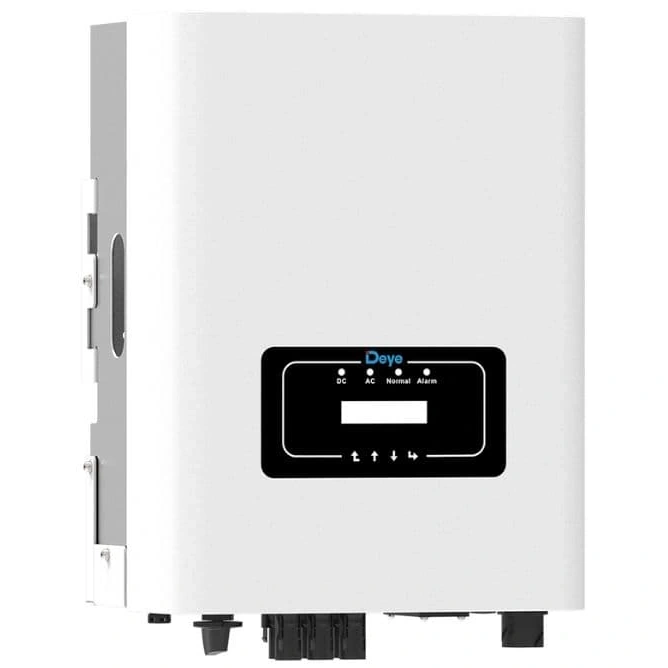
An approved grid-connected inverter
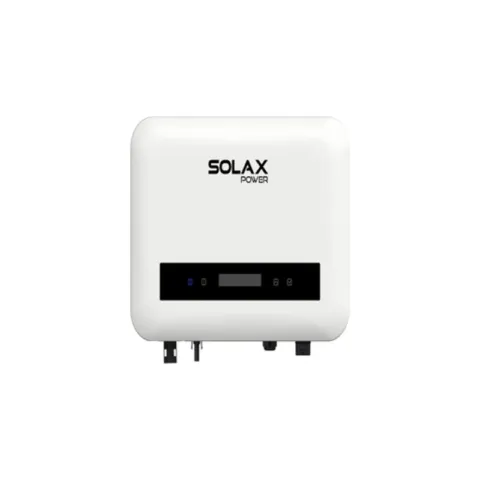
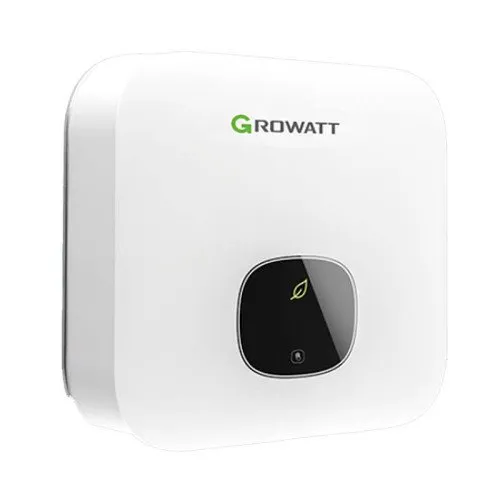
The inverter must be a grid-tie (on-grid) or hybrid inverter that meets the grid-connection requirements, and distributors generally expect a model from SREDA’s approved list. Off-grid inverters cannot export power and do not qualify. Many of the on-grid inverters on our site are marked SREDA approved on their product pages, including the Deye 3kW single phase on-grid inverter at ৳33,000 and the Growatt 5kW on-grid inverter at ৳44,000. For three-phase buildings, see our three-phase on-grid inverters, such as the Deye 5kW three phase on-grid inverter at ৳66,000.
Solar panels
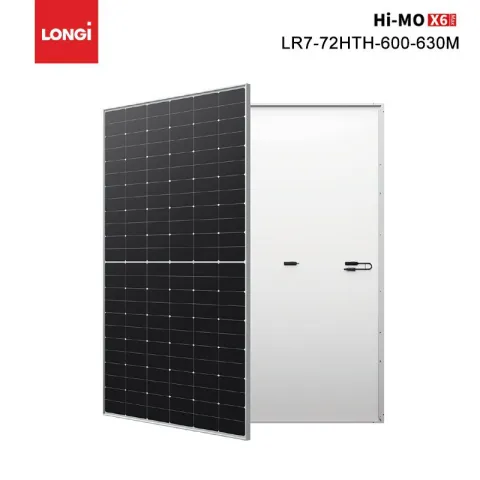
Quality panels from recognised manufacturers, with datasheets and serial numbers you can show the inspector. You can compare current models and prices on our solar panels page.
Protection and metering
DC and AC isolators and breakers, surge protection, earthing, and an AC connection point at your distribution board. The bidirectional net meter itself is supplied or approved by the distributor; ask whether you pay for it or whether it is provided.
Documents you will usually need
Forms and checklists differ between distributors and change over time, but applicants are commonly asked for:
- A completed net metering application form from your distributor.
- A copy of a recent electricity bill showing your consumer or account number, connection type and sanctioned load.
- The applicant’s national ID card.
- Proof of ownership of the property, or the owner’s written consent if you are a tenant.
- Details of the solar system: panel make, model and quantity; inverter make, model and capacity; and the total capacity.
- The inverter’s datasheet and, where required, evidence that it is an approved model.
- A single-line electrical diagram of the system, prepared by your installer.
- For businesses: trade license and company documents.
Ask your distributor’s local office or SREDA’s National Solar Help Desk for the current checklist before you submit. A good installer will prepare the technical documents for you.
Before you apply: a quick checklist
- My bill shows a three-phase connection, and I know my sanctioned load.
- I have asked my distributor for the current capacity limit and application form.
- My planned inverter model is acceptable for grid connection.
- I have the owner’s written consent, or I own the property.
- My installer will provide the single-line diagram, datasheets and panel details.
- I have copies of my NID, a recent bill and the property documents ready.
- I know who will attend the inspection on my behalf.
Ticking all of these before you submit avoids most of the back-and-forth that slows applications down.
How to apply for net metering in Bangladesh: step by step
- Check eligibility and sanctioned load. Confirm your connection is three-phase and note the sanctioned load on your bill. Ask your distributor about the current capacity limit.
- Get a site survey and design. An installer checks your roof space, shade and electrical board, and proposes a system size within the limit and your consumption.
- Choose approved equipment. Use an approved on-grid or hybrid inverter and quality panels.
- Submit the application. File the form and documents with your distributor’s local office (some utilities also offer online submission). Keep a receipt or reference number.
- Technical review. The distributor checks the design, capacity and inverter against the guideline and may ask for changes.
- Install the system. Depending on your distributor’s process, installation may happen before or after technical approval. Ask first to avoid having to change equipment later.
- Inspection. Distributor engineers inspect the installation, protection devices, earthing and inverter settings.
- Agreement. You sign a net metering agreement that sets out how imports, exports and credits are handled.
- Net meter installation. The distributor fits and seals the bidirectional meter.
- Commissioning. The system is switched on in grid-connected mode, and your billing moves to net metering from the next cycle.
How long does it take, and what does it cost?
Timelines vary widely between distributors and areas. Some customers complete the process in a few weeks; others wait several months for inspections and meters. The most common delays come from incomplete documents, an inverter that is not on the approved list, and capacity that exceeds the allowed limit. Getting those three right at the start saves the most time.
Costs fall into three groups:
- The solar system itself: panels, inverter, structure, cabling, protection and installation. Our solar system price guide covers typical budgets.
- Application and meter charges, if any, set by your distributor.
- Your installer’s time for documents and attending the inspection, which is often included in a turnkey quote.
Reading your bill after net metering
Once net metering starts, your bill shows more than one meter reading. Look for:
- Import reading: units taken from the grid during the period.
- Export reading: units your solar system sent to the grid.
- Net units: import minus export, which is what you are billed for when positive.
- Carried-forward credit: if you exported more than you imported, the surplus appears as credit for future bills, subject to the settlement rules in your agreement.
Your inverter’s monitoring app shows how much the panels produced. Comparing that with the export reading tells you how much solar you used directly in the building, which is where most of the savings usually come from.
Worked example: a three-phase office building
To make the process concrete, here is how a typical enquiry runs. A small office building in Dhaka has a three-phase connection with a sanctioned load of 40kW, and its owners want to cut daytime bills.
- Limit check. At the original 70 percent rule, the maximum solar capacity would be 28kW; under the reported revision it could be up to 40kW. The distributor confirms which limit applies.
- Roof check. The usable roof fits about 36 panels of 620W, or roughly 22kW, so the roof, not the regulation, sets the size.
- Consumption check. The office uses most of its electricity between 9 am and 6 pm, so a 22kW system would supply a large share directly, with weekend surplus exported for credit.
- Equipment. Two three-phase on-grid inverters, or one larger unit, from the approved list, sized to match the array.
- Application and inspection. The installer prepares the single-line diagram and datasheets, the owners submit the form with the bill and ownership papers, and the distributor inspects and installs the net meter.
The steps for a three-phase house are the same, just at a smaller scale.
Net metering for homes vs businesses
The rules are the same, but the economics differ:
- Businesses such as offices, shops, schools and factories use most of their power during daylight, so they consume most of their solar directly and export less. Commercial tariffs are also typically higher than residential ones, which shortens the payback.
- Homes often use more electricity in the evening and at night, so a larger share of the day’s solar is exported and comes back later as credit. Net metering is what makes this worthwhile for households.
- Factories on larger connections can install much bigger systems; our guide to rooftop solar for factories covers the extra steps involved.
Common problems and how to avoid them
- Single-phase connection. Check eligibility before buying anything.
- Inverter not approved. Confirm the exact model is acceptable to your distributor.
- System too big for the sanctioned load. Size within the current limit, or apply to increase your sanctioned load first.
- Missing owner consent for rented property or shared roofs.
- Poor installation quality. Missing earthing or surge protection, or untidy wiring, can fail the inspection.
- Using an off-grid inverter. It cannot export, so it cannot be net metered.
- Losing track of the application. Keep copies of everything and the reference number, and follow up regularly.
Is net metering worth it?
For most three-phase homes and businesses with a sunny roof and a meaningful electricity bill, yes. Net metering lets every unit your panels produce count, either by powering your building directly or by earning credit when you are not using it. Businesses that operate in daylight hours benefit most, because their consumption matches solar production closely.
Net metering does not give backup during load-shedding on its own: an on-grid inverter switches off when the grid fails, by design. If you want both bill savings and backup, a hybrid inverter with a battery can do both, provided the hybrid model is acceptable for grid connection. Our guide to on-grid vs hybrid vs off-grid inverters explains the trade-off, and the Gawsia Market rooftop solar case study shows what a large grid-connected system looks like in practice. For official information, SREDA’s National Solar Help Desk publishes guidelines and notices.
Frequently asked questions
Can I get net metering on a single-phase connection?
Net metering in Bangladesh has generally been for three-phase consumers. Ask your distributor about the current rules, and whether upgrading your connection is practical.
How much solar can I install under net metering?
The limit is set as a share of your sanctioned load. It was 70 percent under the original rules and a 2025 revision has been reported to raise it to 100 percent. Confirm the current limit with your distributor.
Which inverter is approved for net metering?
A grid-connected on-grid or hybrid inverter that meets the grid-connection requirements, typically from SREDA’s approved list. Check the exact model with your distributor before buying.
Will my solar system work during load-shedding with net metering?
Not with a plain on-grid inverter, which shuts down when the grid fails for safety. A hybrid inverter with a battery can keep supplying power during outages.
Who installs the net meter?
The distributor installs and seals the bidirectional meter after inspecting your system and signing the agreement.
How long does the net metering process take?
Anything from a few weeks to several months, depending on your distributor and how complete your application is.
Do I still pay a bill with net metering?
Usually yes, for any net units you import and for fixed charges such as demand or meter charges set by your tariff. In months when you export more than you import, the surplus is carried forward as credit under the settlement rules in your agreement.
Can GPTECH help with the application?
Yes. We design systems within the allowed capacity, supply approved inverters, prepare the technical documents and support you through inspection. Call +880 1712-567878.
Starting your net metering application
Most applications that go smoothly have one thing in common: the owner checked eligibility, capacity and the inverter model with the distributor before buying anything. Check your connection type and sanctioned load on your bill, confirm the current rules with your distributor, then design a system within the limit using an approved inverter. If you would like help, send us a photo of your bill and your roof, and we will propose a system and guide you through the application. Call +880 1712-567878 or message us on WhatsApp.
Frequently asked questions
Can I get net metering on a single-phase connection?
Net metering in Bangladesh has generally been for three-phase consumers. Ask your distributor about the current rules, and whether upgrading your connection is practical.
How much solar can I install under net metering?
The limit is set as a share of your sanctioned load. It was 70 percent under the original rules and a 2025 revision has been reported to raise it to 100 percent. Confirm the current limit with your distributor.
Which inverter is approved for net metering?
A grid-connected on-grid or hybrid inverter that meets the grid-connection requirements, typically from SREDA's approved list. Check the exact model with your distributor before buying.
Will my solar system work during load-shedding with net metering?
Not with a plain on-grid inverter, which shuts down when the grid fails for safety. A hybrid inverter with a battery can keep supplying power during outages.
Who installs the net meter?
The distributor installs and seals the bidirectional meter after inspecting your system and signing the agreement.
How long does the net metering process take?
Anything from a few weeks to several months, depending on your distributor and how complete your application is.
Do I still pay a bill with net metering?
Usually yes, for any net units you import and for fixed charges such as demand or meter charges set by your tariff. In months when you export more than you import, the surplus is carried forward as credit under the settlement rules in your agreement.
Can GPTECH help with the application?
Yes. We design systems within the allowed capacity, supply approved inverters, prepare the technical documents and support you through inspection. Call +880 1712-567878.
Related products
-
SolaX
SolaX 5kW Single Phase On-Grid Solar Inverter (X1-MINI-5K-G4-P)
৳33,000 In stock -
Jinko Solar
Jinko 750W Bifacial With Dual Glass Solar Panel
৳14,850 In stock -
LONGi
LONGi 615W Mono Solar Panel (SREDA approved)
৳12,177 In stock -
LONGi
LONGi 640W Mono Solar Panel
৳12,672 In stock