Project summary
GPTECH completed a 3 MW on-grid rooftop solar system at Gawsia Market in Bhulta, Narayanganj. A solar model for Bhulta puts a system this size at about 4.1 million units a year, or about 11,200 a day on average. These are modelled estimates, not meter readings from the site.
GPTECH has completed a 3 MW rooftop solar system at Gawsia Market in Bhulta, Narayanganj, built as an on-grid plant. At this size, it is one of the larger projects on our client list, and it shows how far rooftop solar can go on a commercial building in Bangladesh.
This case study sets out what we can confirm about the project and what 3 MW rooftop solar normally means in practice. Where a number is an estimate, we say so. The estimates are not meter readings from this site.
On this page: Project at a glance · About the site · Why on-grid rooftop solar suits a commercial market · What 3 MW rooftop solar means in practice · How 3 MW rooftop solar savings add up · What this means for the people behind a market · What a 3 MW rooftop solar project needs to get right · How a rooftop solar project moves from survey to switch-on · What other building owners can take from this · Planning rooftop solar for your building?
Project at a glance
| Client site | Gawsia Market |
|---|---|
| Location | Bhulta, Narayanganj |
| Sector | Commercial |
| System type | On-grid rooftop solar |
| Capacity | 3 MW (3,000 kW) |
| Status | Completed |
About the site
Gawsia is one of Bangladesh’s best-known wholesale markets. The Daily Star has described it as famous for low-cost saris and lungis, with traders travelling there to buy stock.
Commercial buildings like this have a useful feature for solar: much of their electricity is used during business hours, which is also when panels produce power.
Why on-grid rooftop solar suits a commercial market
An on-grid system connects to the building’s existing electricity supply. Three things make it a natural fit for a large commercial roof:
- Solar is used on site first. Daytime solar power goes to the building’s loads, which reduces the electricity bought from the grid.
- No battery bank is needed. Leaving out batteries keeps the cost down and removes a component that would need replacing over the life of the plant.
- The roof is already there. The system uses roof space that would otherwise sit idle, without taking up any land.
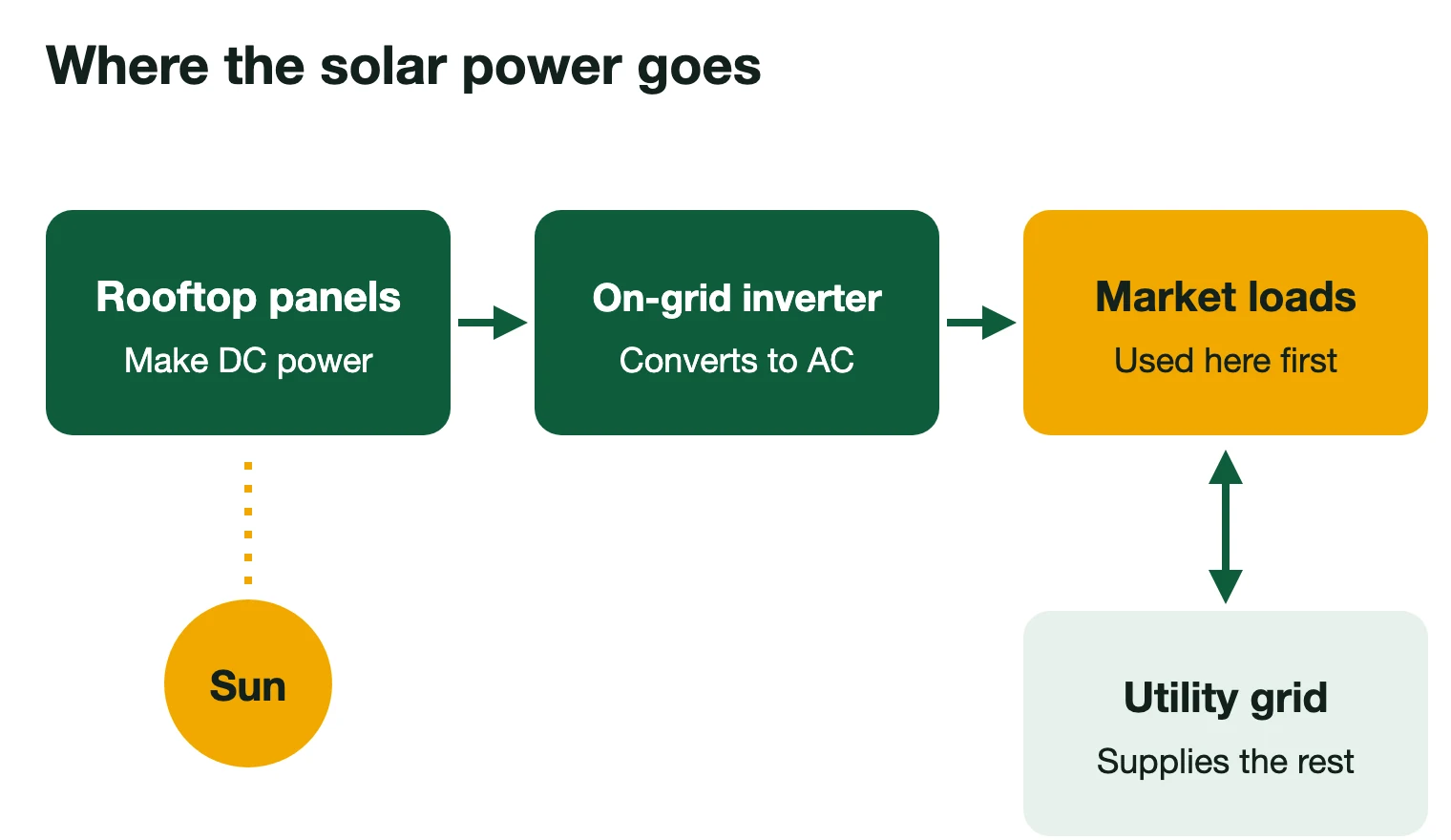
There is one limit every owner should understand. A standard on-grid system shuts down when the grid fails, as a safety measure, so it reduces bills but does not provide backup power on its own.
What 3 MW rooftop solar means in practice
The figures below are planning estimates, using the European Commission’s PVGIS solar model for Bhulta and the same rules of thumb as our guide to large rooftop systems. They treat 3 MW rooftop solar as 3,000 kWp of panel capacity and are not measured results from Gawsia Market.
| Measure | Typical estimate | Basis |
|---|---|---|
| Energy per day | About 11,200 units (kWh) on average | PVGIS model for Bhulta |
| Energy per year | About 4.1 million units (kWh) | PVGIS model for Bhulta |
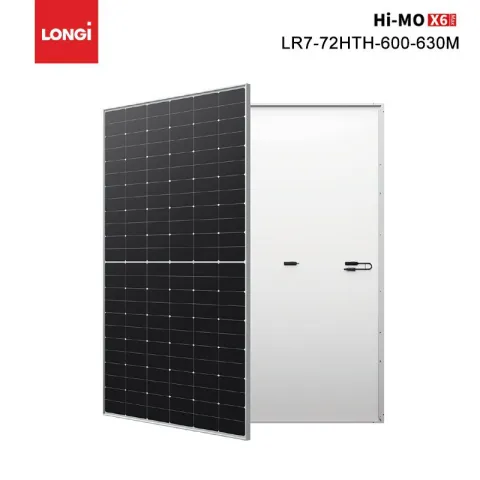
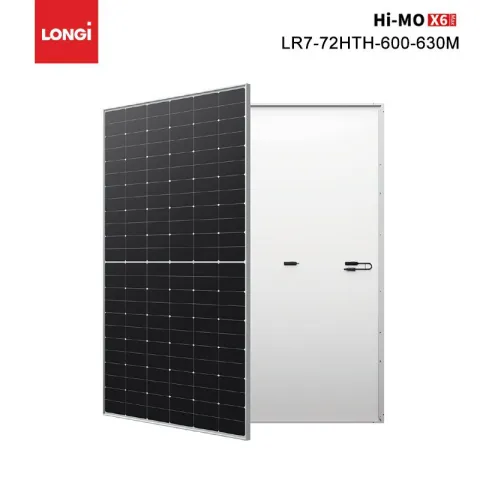
| Number of panels | About 5,000 to 5,500 | 550 W to 600 W panels |
| Roof area | 18,000 to 24,000 square metres | 6 to 8 square metres per kWp on a flat roof |
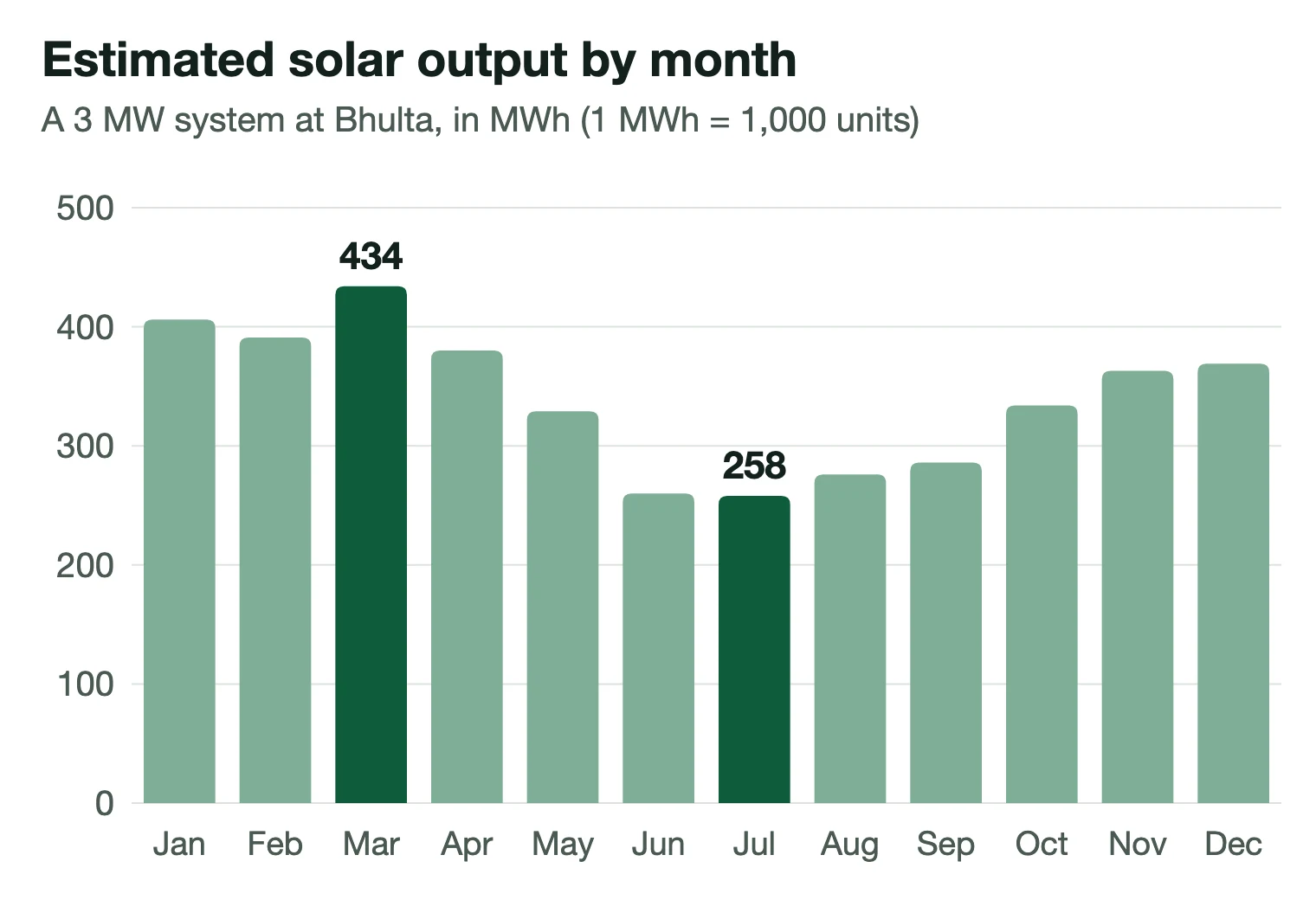
A 3 MW rooftop solar plant at Bhulta produces the most in the dry months. In the model, March produces about 434,000 units, while July produces about 258,000, roughly 40% less, because of monsoon cloud. Actual output also depends on panel cleanliness, shading, roof layout and how much of the power the building can use.
How 3 MW rooftop solar savings add up
Every unit made on the roof and used in the building is a unit that does not have to be bought. To show what that can be worth, take a round figure of Tk 10 per unit. At that rate, a March like the one above would be worth about Tk 43 lakh and a July about Tk 26 lakh. Across a year, 4.1 million units would be worth about Tk 4.1 crore if every unit were used on site.
Now compare that with an example installed cost of Tk 60,000 per kWp, the same round figure used in our factory guide. A 3 MW rooftop solar system would then cost Tk 18 crore, and the savings would cover it in about four and a half years. After that, the power is close to free for the rest of the system’s working life, apart from upkeep.
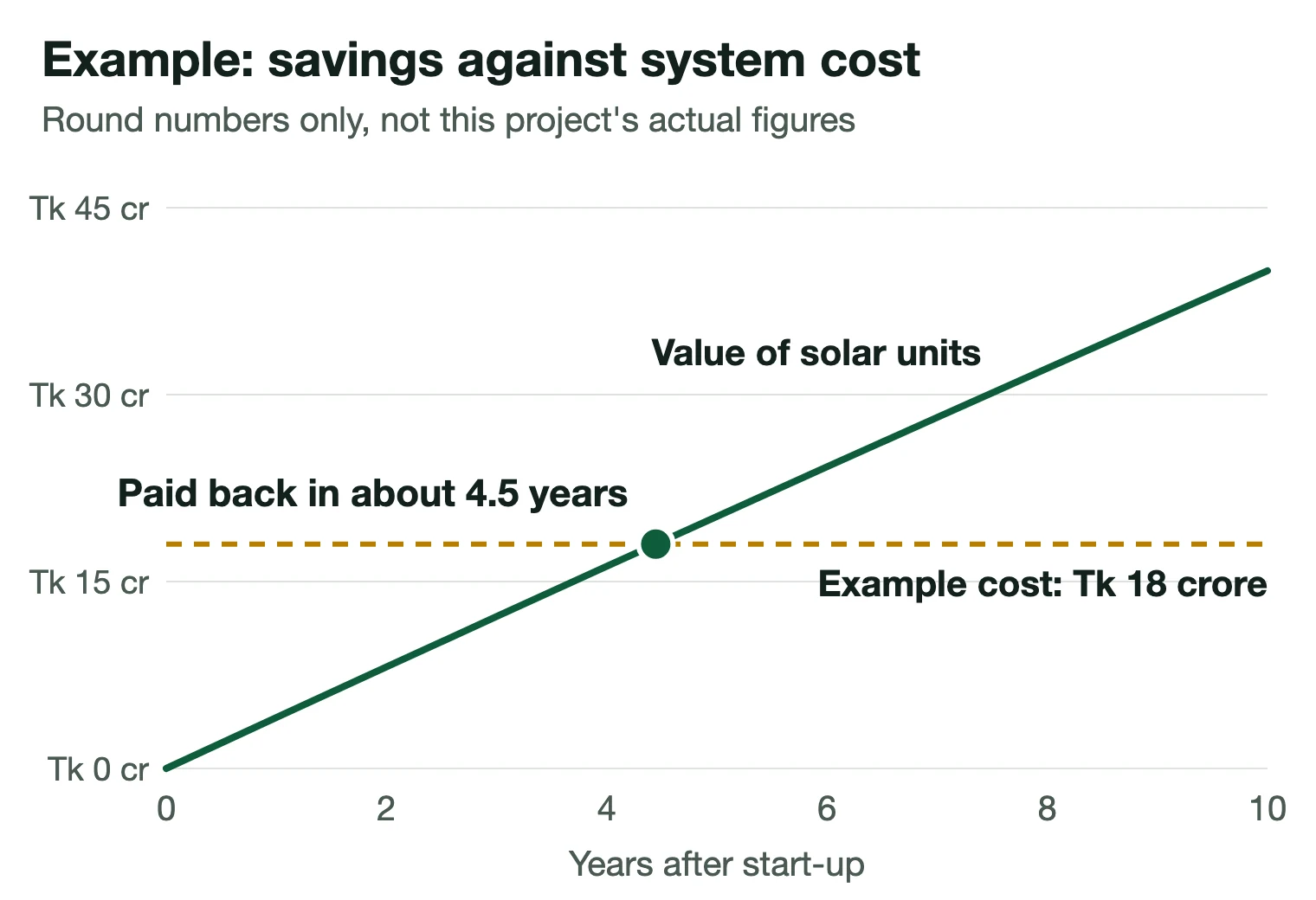
Any owner should repeat this sum with the rate on their own bill, a real quotation and a realistic share of self-use.
What this means for the people behind a market
A wholesale market is made up of people: shop owners watching their costs, staff working long days, and traders travelling in to buy stock for their own customers. We have not interviewed them for this article, so we will not put words in their mouths. But this is what 3 MW rooftop solar can do for a business community:
- More money stays in the business. Lower spending on daytime electricity leaves more to put into stock, staff and growth. How that benefit is shared depends on how power costs are divided in each building.
- Costs become easier to plan. Most of the cost of solar is paid at the start, so a business is less exposed to future tariff rises on the units it makes itself.
- Cleaner power for the community. At a round planning figure of 0.6 kg of CO2 per grid unit, the 4.1 million units from 3 MW rooftop solar would avoid about 2,450 tonnes of CO2 a year.
- A roof that earns its keep. Space that did nothing for the business becomes a long-term asset for the people who depend on it.
What a 3 MW rooftop solar project needs to get right
A 3 MW rooftop solar plant is a power plant built on top of a working building. On any commercial project at this scale, these areas decide the result:
- Roof strength and waterproofing. The structure must carry the panels and mounting safely, and the fixings must not create leaks.
- Load matching. The plant should be sized against the building’s real daytime demand, using its load profile and electricity bills.
- Three-phase inverter design. Output needs to be matched to the supply and spread correctly across all three phases.
- Electrical protection. DC and AC isolation, surge protection, earthing and correctly rated cables keep the plant and the building safe.
- Utility approval. Grid-connected systems need approval from the local electricity distributor, and the rules for net metering should be confirmed with them before work starts.
- Cleaning and monitoring. Dust reduces output, so a large plant needs regular cleaning and monitoring that shows faults early.
How a rooftop solar project moves from survey to switch-on
Every site is different, but a commercial project normally follows the same order. This is the general process, not a diary of the Gawsia Market job.
- Bill and load review. The owner shares recent electricity bills so that daytime demand can be estimated before any design work begins.
- Site survey. Engineers check the roof area, shade, access routes, the main switchboard and the point where the solar power will connect.
- Structural check. A qualified engineer confirms that the roof can safely carry the extra load, including wind forces on the panels.
- System design and proposal. The panel layout, inverter sizing, cable routes and protection are drawn up, along with a yield estimate and its assumptions.
- Utility application. The owner and installer submit the documents the electricity distributor requires for a grid-connected system.
- Installation. Mounting, panels, inverters and cabling are installed, ideally in stages so the building can keep trading.
- Testing and handover. The system is tested, switched on and handed over with monitoring access and a cleaning plan.
On a 3 MW rooftop solar plant, work across a busy building has to be planned around the people using it: keeping walkways clear, moving materials outside peak trading hours and limiting any electrical shutdowns.
What other building owners can take from this
- Start with your bills. Whether you want 3 MW rooftop solar or a much smaller plant, twelve months of electricity bills show more than a headline system size.
- Check usable roof area, not total area. Shade, water tanks, walkways and parapet clearance all reduce the space available.
- Decide whether you need backup. If your aim is a lower bill, on-grid is usually the simplest choice. If you also need power during outages, the design has to include that from the start.
- Ask how savings were calculated. A reliable proposal states its yield, self-use share and tariff assumptions.
Planning rooftop solar for your building?
GPTECH works with markets, factories, hospitals and other commercial sites across Bangladesh. See more of our completed projects, browse three-phase on-grid inverters and solar panels, or call us to discuss 3 MW rooftop solar or a smaller system for your roof and electricity bills.
Frequently asked questions
How big is the Gawsia Market solar system?
It is a 3 MW (3,000 kW) on-grid rooftop solar system.
Where is the project?
At Gawsia Market in Bhulta, Narayanganj.
How much electricity does a 3 MW rooftop system produce?
As a modelled estimate for Bhulta, about 4.1 million units a year, or about 11,200 a day on average. Actual output depends on season, cleanliness, shading and layout.
Does an on-grid system work during load-shedding?
A standard on-grid system shuts down when the grid fails, as a safety measure. Backup needs a different design.
Can GPTECH assess my building?
Yes. Call us with your electricity bills and roof details to discuss your site.
Related products
-
Jinko Solar
Jinko 750W Bifacial With Dual Glass Solar Panel
৳14,850 In stock -
LONGi
LONGi 615W Mono Solar Panel (SREDA approved)
৳12,177 In stock -
LONGi
LONGi 640W Mono Solar Panel
৳12,672 In stock -
Jinko Solar
Jinko 740W Bifacial With Dual Glass Solar Panel
৳14,652 In stock