Quick answer
With net metering, a bi-directional meter measures the power you import and export and you pay only for the net. Estimate payback by dividing the system cost by your yearly bill savings, and confirm current requirements with your electricity distributor.
On this page: The idea behind net metering in Bangladesh, in plain words · Who benefits most from net metering in Bangladesh · What equipment you need for net metering in Bangladesh · The journey from idea to first credit · Payback maths for net metering in Bangladesh, using your own bill · Net metering and batteries: do you need both? · What can slow a net metering application · Common mistakes to avoid · Frequently asked questions · Getting started with net metering in Bangladesh
Net metering in Bangladesh is an arrangement that lets a home, shop or factory with rooftop solar send its surplus electricity into the utility grid and receive credit for it, so that the bill reflects only what you took from the grid minus what you gave back. A two-way meter records both directions. The exact approval steps, capacity limits and credit rules are set by the government and your distribution utility and have been revised over time, so always confirm the current position with the utility before you commit money.
This guide follows the life of a rooftop solar system from the first idea to the day the bill comes in. We explain what net metering is, how it differs from simply using your own solar, how to calculate a payback period using your own numbers, which equipment you need, what to expect from the application process in general terms, and where people go wrong. We do not quote tariffs or fees, because they change and you should take them from your own bill and the utility.
The idea behind net metering in Bangladesh, in plain words
The easiest way to grasp net metering in Bangladesh is to picture a shop with solar panels on the roof. At noon the panels make more power than the shop is using. Without any arrangement, that extra power has nowhere to go, and a grid-tied inverter either throttles down or the owner needs a battery to catch it. With net metering, the surplus flows out through the meter into the utility line, and the meter counts it.
In the evening, when the panels stop and the shop needs power, it draws from the grid again, and the meter counts that as well. At the end of the billing period, the utility looks at the difference. If the shop took more than it gave, it pays for the net amount. If it gave more than it took, the surplus is treated according to the rules in force at the time, for example carried forward as a credit.
For a neutral overview of the concept as it works around the world, see the Wikipedia page on net metering. Bangladesh’s own rules are specific and local, which is why you must rely on your utility for the details.
Net metering is not the same as using your own solar
Two different benefits get mixed up whenever people discuss net metering in Bangladesh. The first is self-consumption: every unit your panels make and your building uses directly is a unit you do not buy. This happens with or without net metering, and it is usually the larger part of the saving for a daytime-heavy business.
The second is export credit: units you send out are credited against units you later take. This is what net metering adds. If your usage is high during the day, there is little to export and net metering matters less. If you are away from home on weekdays, the export part grows in importance.
Who benefits most from net metering in Bangladesh
Different customers get different value from net metering in Bangladesh, so here is a short sorting guide before the arithmetic.
- Factories and offices that run during the day. They use most of their solar output directly. Net metering adds a safety net for weekends, Fridays and holidays, when the building uses little and the roof keeps producing.
- Shops closed on certain days. A shop that shuts for a weekly holiday will export a full day of output that would otherwise be wasted.
- Homes where adults work outside. Daytime consumption is low and evening consumption is high. Export credit offsets part of the evening draw, subject to how the utility values credits.
- Properties with large roofs and small loads. A school, a warehouse or a mosque complex can generate far more than it uses, but the exportable amount may be capped by rules.
A building that suffers frequent outages needs a different answer, because a plain grid-tied system shuts down when the grid does. That is why backup customers usually need a hybrid inverter, which we explain in our article on on-grid, hybrid and off-grid inverters.
What equipment you need for net metering in Bangladesh
A net-metered system has four main parts: solar panels, a grid-tied or hybrid inverter, a bidirectional meter, and protective switchgear. The first two are the parts you buy from a supplier; the meter is usually provided or approved by the utility, and the protection devices follow the utility’s technical requirements.
Panels
Modern panels commonly come in 550W to 730W, and the most efficient models give more electricity from a limited roof. You can browse our range of solar panels, which includes brands such as Jinko Solar, LONGi and Canadian Solar.
Inverter
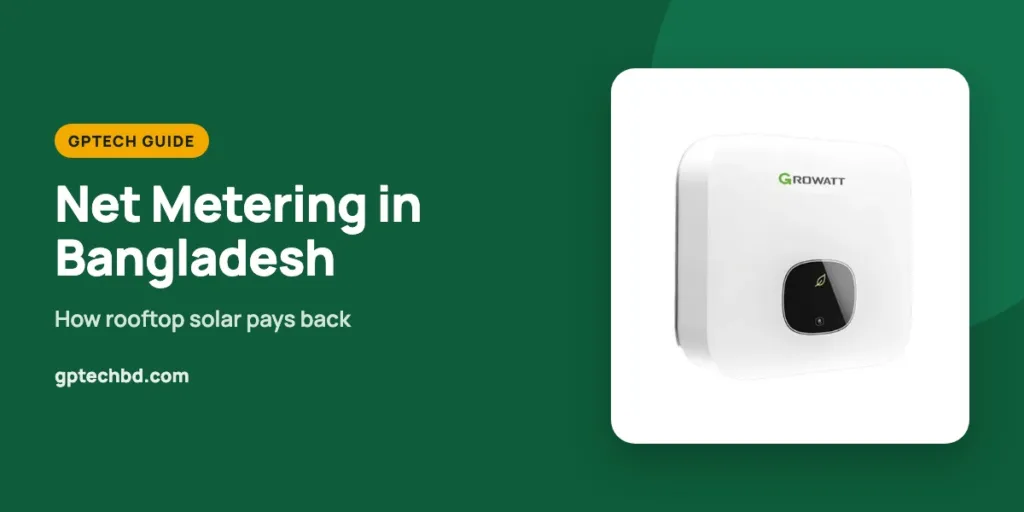
For a grid-connected system, the inverter must be a grid-tied model that complies with the utility’s requirements for voltage and frequency range and anti-islanding protection. Anti-islanding means the inverter shuts down when the grid fails, so that it does not energise a line on which workers are repairing. Choose between single-phase and three-phase according to your connection: see single-phase on-grid inverters or three-phase on-grid inverters. Brands such as Huawei and Growatt are widely used for grid-tied rooftop systems.
Meter and protection
A bidirectional meter counts energy in both directions, either as two registers in one device or as two separate registers. Your utility will tell you what it will install and who pays for it. The switchgear normally includes breakers, surge protection and earthing, designed to the standards the utility expects. Ask your installer for a single-line diagram, a simple drawing that shows how every component connects.
The journey from idea to first credit
We are not going to list exact fees or time limits, since they differ by utility and change. What follows is the general pattern that most customers experience. Treat it as a map and ask your utility for the current checklist.
- Check your connection. Look at your sanctioned load, phase type and the condition of your wiring. Some rules tie the allowed solar capacity to your connection.
- Do a site survey. An engineer measures the roof, checks shading and structure, and proposes a size. See our installation and site survey details.
- Prepare the documents. Utilities usually ask for an application form, ownership or tenancy proof, recent bills, technical drawings and equipment datasheets.
- Apply to your distribution utility. That may be DESCO, DPDC, BREB or its local PBS, NESCO, WZPDCL or another operator, depending on where you live.
- Wait for technical review and approval. The utility checks that the plan is safe for the local network.
- Install the system. Panels, structure, inverter, wiring and protection go in.
- Inspection and meter installation. The utility inspects and sets up the two-way metering.
- Commissioning and agreement. The system is switched on, and the billing arrangement begins.
Notice that approval comes before you install. Customers who buy and mount everything first sometimes discover that their design needs changes to meet the utility’s requirements. Ask your supplier whether they will help with the paperwork, and read the finer points in our FAQ page.
Payback maths for net metering in Bangladesh, using your own bill
Rooftop solar with net metering in Bangladesh stands or falls on payback. Payback is the time it takes for the savings to equal what you paid. The method is simple, even though your inputs will be different from ours. Everything here uses placeholder numbers, which you should replace.
Step 1: estimate the annual energy
Bangladesh gets roughly 4 to 5 peak sun hours a day, and a 1 kWp array typically yields about 3.5 to 4.5 kWh per day after losses. Take the middle, 4 kWh per kWp per day. For a 5 kWp system the daily output is 5 x 4 = 20 kWh, and the annual output is 20 x 365 = 7,300 kWh. A kWh is one unit on your bill.
Step 2: split it into self-use and export
Suppose this is a small factory floor that uses 80 percent of the solar energy directly. Self-use is 7,300 x 0.80 = 5,840 kWh. Export is 7,300 x 0.20 = 1,460 kWh.
Step 3: value each part
Self-used units are worth roughly your own tariff, the rate per unit you pay now. Exported units are worth whatever the net metering rules say they are worth, which might equal your tariff, or something different. Do not assume. For the arithmetic, call your tariff T taka per unit and assume, for illustration only, that exports are credited at the same rate.
Annual saving = (5,840 + 1,460) x T = 7,300 x T taka. If T were 10 taka per unit, purely as a round number for the sum and not as a real tariff, the saving would be 7,300 x 10 = 73,000 taka a year.
Step 4: divide the cost by the saving
Payback in years = total installed cost / annual saving. If your quotation is Q taka, then payback is Q / 73,000 on this illustration. A quote of 500,000 taka would give 500,000 / 73,000 = 6.85 years, again an invented round figure to show the method. Plug in your own tariff and your actual quotation.
Step 5: allow for the things that move
Panels lose a small amount of output each year, so later years produce a little less. Tariffs can rise or fall. Cleaning, inverter servicing and an eventual inverter replacement are costs to include. A fair estimate has a range, not a single figure. If the range is between, say, six and nine years on your inputs, that is more honest and more useful than a promise of exactly five.
For a sense of system sizes and budgets before you request a quote, our guide on solar system price in Bangladesh explains what drives the cost. And if you are unsure about the panel count, read how many solar panels a 5kW system needs.
Why self-use often matters more than export
It is tempting to see net metering in Bangladesh as the main prize. In many cases, the larger value is still the electricity you simply do not buy. Every unit self-used avoids the full retail rate, including any charges bundled into it. A unit exported is valued by whatever the credit rules say, and the rules might not pass on every part of your tariff.
That means the best design is often one that matches the array to your daytime load, rather than a huge array whose main purpose is to export. A bigger array costs more, and the extra units may be credited at a lower effective value than the units you would have self-used. Do the sum for both cases before deciding.
Shifting loads to match the sun
Small habits help. Run the water pump, the washing machine and the irrigation motor between about 10 am and 3 pm. In a factory, schedule heavy processes in daylight where you can. Every kilowatt-hour moved into solar hours is a kilowatt-hour that does not depend on credit rules at all.
Net metering and batteries: do you need both?
The table below compares three common setups, and then we explain the choice. A battery stores solar energy for use after dark or during an outage, while net metering uses the grid as a notional store. They solve different problems. Net metering lowers your bill but gives no backup, because a standard grid-tied system stops when the grid does. A battery gives backup and lets you use more of your own solar, but it adds cost.
| Setup | Power during an outage | Effect on the bill | Main cost driver |
|---|---|---|---|
| Grid-tied solar with net metering | None; inverter shuts down | Lower, through self-use and export credit | Panels and grid-tied inverter |
| Hybrid solar with battery, grid connected | Yes, for connected essentials | Lower; depends on settings and permission to export | Battery and hybrid inverter |
| Grid-tied solar plus diesel generator | Yes, from the generator | Lower daytime bill, generator fuel still needed | Panels, inverter and fuel |
If load-shedding is a daily trouble, a hybrid inverter with a battery can be connected to the grid and may also be able to export, depending on the model and what the utility permits. Hybrids from Deye are common in homes. Ask the utility whether a hybrid system can be net-metered, and what is required. Our comparison of IPS and solar hybrid inverters for load-shedding covers the backup side, and our hybrid inverter range shows what is available.
For a factory with a diesel generator, the pattern is different. The generator handles outages, the on-grid solar lowers daytime consumption, and no battery is needed. We cover that in rooftop solar for factories.
What can slow a net metering application
Delay is the biggest practical frustration with net metering in Bangladesh. Applications are most often held up by incomplete documents, a design that does not match the utility’s technical conditions, or a connection that needs upgrading before it can take the system. Some roofs belong to a landlord or a building association who must consent. In multi-storey buildings, the question of whose meter and whose roof can be complicated.
Utilities also work to their own timelines. We cannot promise how long yours will take, and a supplier who promises an exact date for approval is guessing. The sensible approach is to start the application early and keep copies of every document.
Common mistakes to avoid
These are the errors we see most often around net metering in Bangladesh.
- Installing first and applying later. The system may need modification to be accepted.
- Taking a salesperson’s savings figure at face value. Ask for the assumptions: yield per kWp, self-use share, tariff used, and what credit value was assumed for exports.
- Sizing for export instead of for your load. A larger array than your real consumption may pay back slowly if surplus is valued lower than self-use.
- Using a non-compliant inverter. The utility will want a certified grid-tied model with the right protections. Check the datasheet, and ask for evidence of compliance.
- Ignoring the warranty and service route. Know who repairs the inverter in Bangladesh. Read about what an inverter warranty covers before choosing.
- Forgetting maintenance. Dust in the dry season and bird droppings cut output. A rinse with clean water in the early morning or evening, never on hot glass at noon, helps.
- Expecting the bill to be zero. Fixed charges, demand charges or minimum bills may remain, depending on the tariff structure.
Frequently asked questions
What is net metering in Bangladesh in simple words?
It is a billing arrangement in which your rooftop solar system’s surplus power goes to the utility grid and is credited against the power you take from it. A two-way meter measures both flows. You then pay for the net difference, following the rules of your utility.
Is net metering in Bangladesh available for homes, or only for factories?
Rooftop solar is promoted for homes, shops, offices and factories alike, but eligibility, capacity limits and the application process can vary by customer category and by utility. Check with your distribution utility for the current rules.
Do I need a battery for net metering?
No. A grid-tied system with a two-way meter works without a battery. A battery is only needed if you want backup during outages or want to store energy for the evening.
Will net metering give me power during load-shedding?
No, not by itself. A standard grid-tied inverter shuts off during a grid outage for safety. To keep lights and fans running, you need a hybrid inverter with a battery or a separate backup source.
How long does it take to recover the cost of rooftop solar in Bangladesh?
It depends on your tariff, your system cost, how much of the output you use directly and how exports are credited. Use the five-step method above with your own numbers, and treat any single quoted payback figure with caution.
Who do I apply to for net metering?
You apply to the distribution utility that supplies your connection, such as DESCO, DPDC, BREB through your local PBS, NESCO or WZPDCL. Ask them for their current application form and checklist.
Can I add solar panels later and still use the same net metering arrangement?
Extending a system often requires informing or getting approval from the utility, especially if the total capacity changes. Plan the maximum size at the start, and ask the inverter supplier how many panels it can accept.
Do I still pay an electricity bill if I have solar?
Usually yes, at least some charges, because you still use the grid at night and in the rainy season, and some charges are fixed. The size of the bill depends on your usage, system size and the tariff structure.
Getting started with net metering in Bangladesh
Net metering in Bangladesh rewards a simple, honest approach: size the system to your real load, choose certified equipment, apply to the utility before installing, and calculate payback with your own tariff rather than anyone else’s. If you do those four things, the paperwork becomes a manageable checklist rather than a mystery.
If you would like help, call GPTECH on +880 1712-567878 or message us on WhatsApp for a free site survey and quotation. We supply genuine, warranty-backed products with delivery across Bangladesh. Read our warranty terms, or reach us through the contact page, and we will help you plan a system that suits your roof and your bill.
Frequently asked questions
What is net metering?
Net metering uses a bi-directional meter to measure the electricity you import from the grid and the surplus you export. At the end of the billing period you pay for the net amount.
Which inverter do I need for net metering?
A grid-compliant on-grid or hybrid inverter. Off-grid inverters are not used for net metering.
How do I estimate the payback period?
Estimate yearly output (array size in kWp x about 4 to 5 kWh per day x 365), multiply by the tariff you pay per kWh, then divide the system cost by those yearly savings. Treat the result as a rough estimate.
Where do I apply for net metering?
Apply through your electricity distributor, for example your DESCO, DPDC, BREB or other utility office. Requirements and limits change, so ask them for the current checklist.
Related products
-
SolaX
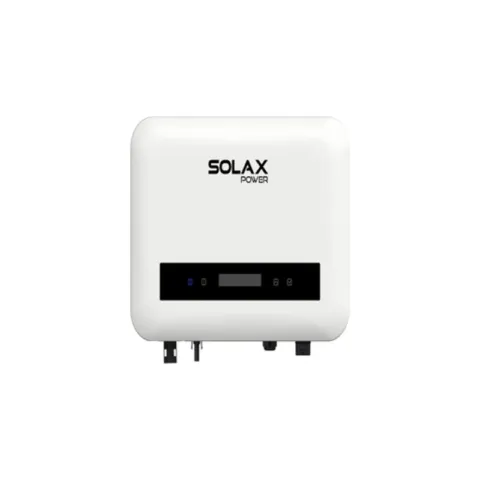
SolaX 5kW Single Phase On-Grid Solar Inverter (X1-MINI-5K-G4-P)
৳33,000 In stock -
SolaX
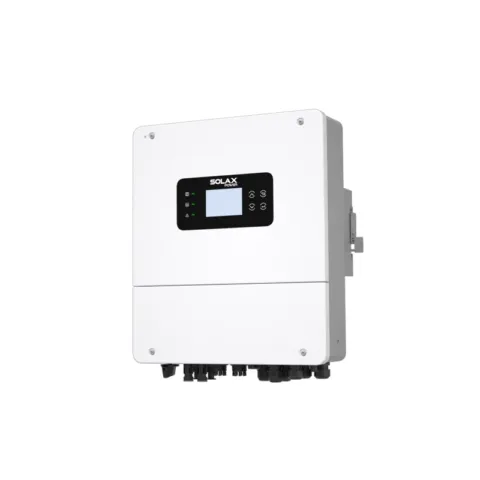
SolaX 3kW Single Phase Low Voltage Hybrid Solar Inverter
৳100,100 In stock -
SolaX
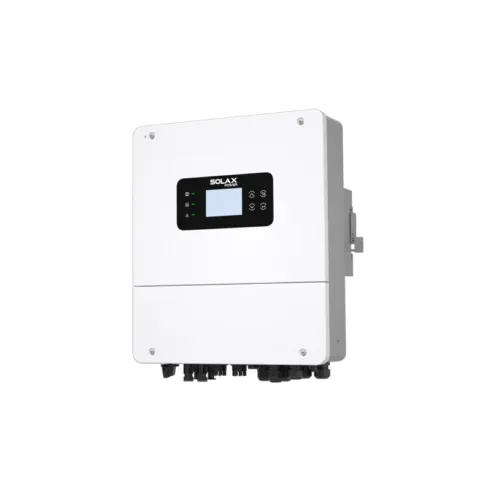
SolaX 5kW Single Phase Low Voltage Hybrid Solar Inverter (SREDA approved)
৳121,000 In stock -
SolaX
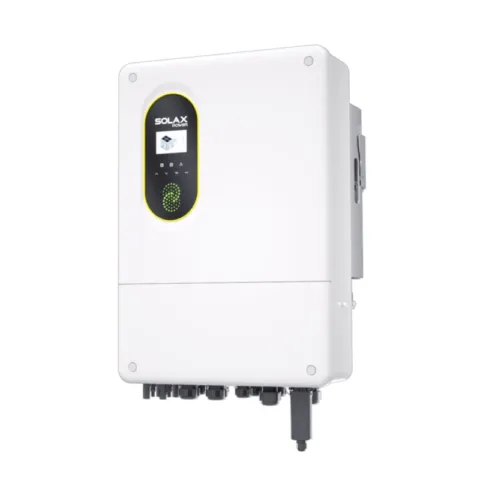
SolaX 10kW Three Phase Low Voltage Hybrid Solar Inverter
৳242,000 In stock