Quick answer
Divide the system size by the panel wattage: a 5kW system needs about 9 to 10 panels of 550W, or 8 to 9 panels of 620W, and roughly 23 to 25 m² of clear, shade-free roof.
On this page: The formula behind how many solar panels does a 5kW system need · Panel count for a 5kW system by panel wattage · Step by step: how many solar panels does a 5kW system need on your roof? · How much roof space do the panels take? · How much electricity will a 5kW array make? · Sizing from your electricity bill instead of a round number · Matching the panels to the inverter and your loads · Common mistakes to avoid · Frequently asked questions · So, how many solar panels does a 5kW system need for you?
How many solar panels does a 5kW system need? With modern 600W panels the answer is 9, which gives about 5.4 kWp. With 550W panels you need 10, with 650W panels you need 8, and with 700W panels you need 8 as well (5.6 kWp). The exact count depends on the wattage of the panel you pick, because a “5kW system” is really a target for the total panel capacity, not a fixed number of panels.
That sounds simple, but a few other numbers decide whether those panels will actually suit your roof and your inverter. In this article we show the formula, a table of panel counts for each wattage, how much roof area you must set aside, how much electricity to expect, and how to size from your electricity bill instead of from a round number. We finish with the mistakes that cost people money and a set of questions we hear often.
The formula behind how many solar panels does a 5kW system need
The answer to how many solar panels does a 5kW system need always starts with one division. Divide the system size in watts by the wattage of one panel, then round up to a whole panel. That is all. For a 5 kW target, the system size is 5,000 W.
Before going further, let us define some terms. A kW is a thousand watts and describes power at one moment. A kWp (kilowatt-peak) is the rated capacity of the solar array under standard test conditions, which is how panels are labelled (the Wikipedia overview of solar panels covers the basics). When someone says “5kW solar”, they usually mean either 5 kWp of panels or a 5 kW inverter, and these are not always the same number. We come back to that below.
Written as a formula: number of panels = (target kWp x 1,000) / panel watts, rounded up. Rounding up matters because you cannot install half a panel, and rounding down would leave you short of your target.
Panel count for a 5kW system by panel wattage
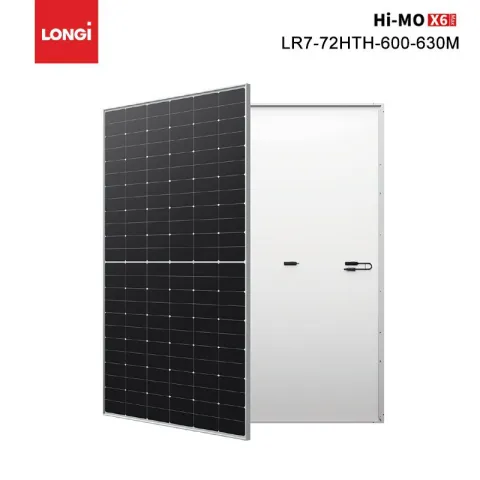
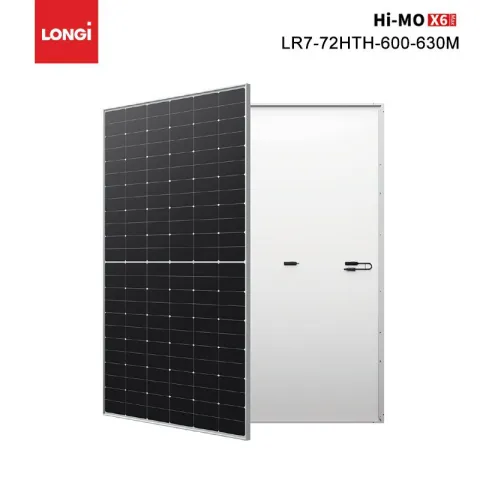
The table below answers how many solar panels does a 5kW system need for each common wattage. Panels sold today are far larger in output than the 330W and 400W models of a few years ago. The table shows the arithmetic for common sizes. GPTECH stocks modern panels from brands such as Canadian Solar, Jinko Solar, LONGi, JA Solar and Trina Solar, in roughly the 550W to 730W range.
| Panel wattage | 5,000 W divided by panel | Panels needed (rounded up) | Actual array size |
|---|---|---|---|
| 550 W | 9.09 | 10 | 5.50 kWp |
| 580 W | 8.62 | 9 | 5.22 kWp |
| 600 W | 8.33 | 9 | 5.40 kWp |
| 620 W | 8.06 | 9 | 5.58 kWp |
| 650 W | 7.69 | 8 | 5.20 kWp |
| 700 W | 7.14 | 8 | 5.60 kWp |
| 730 W | 6.85 | 7 | 5.11 kWp |
Look at the last column. Every row ends up a little above 5 kWp, and that is normal. A slightly larger array is rarely a problem, as long as the inverter can accept it. Fewer, higher-wattage panels also mean fewer clamps, fewer cables and less roof penetration, though each panel is bigger and heavier to carry up the stairs.
Rows such as 620W show the rounding trap. 5,000 / 620 is 8.06, which is just over 8, so you need 9 panels, not 8. Eight panels at 620W give 4.96 kWp, a hair under target, and some installers will accept that. Others will want to reach the full 5 kW. Decide this before you order.
Step by step: how many solar panels does a 5kW system need on your roof?
The table assumes you already picked a panel, and the real question of how many solar panels does a 5kW system need on your roof has a few more steps. Here is the order we follow on a real site, from first visit to final count.
- Fix the target in kWp. Use your bill, your budget or your roof, whichever limits you first (see the section on sizing from your bill below).
- Choose a panel wattage. Check price per watt as well as total price, and read the datasheet for dimensions and weight.
- Calculate the count. Use the formula and round up.
- Check roof area. Multiply the count by the panel’s length and width, then add spacing.
- Check the inverter match. Confirm the array voltage and current fit the inverter’s input limits.
- Check shading and orientation. Water tanks, stair-room walls, nearby buildings and parapets all matter.
- Confirm the final layout with a site survey. A measured drawing beats any estimate.
If a seller gives you a number of panels without asking about these steps, treat it as a rough guess. You can read how GPTECH handles this on our installation and site survey page.
How much roof space do the panels take?
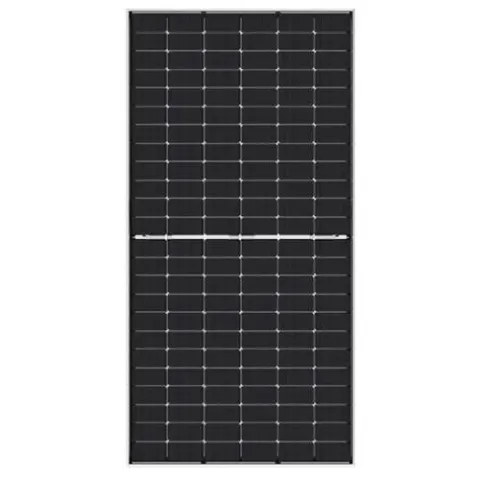
Panel count is only half of the story when you ask how many solar panels does a 5kW system need in practice; the roof must hold them. A 550W to 650W panel is typically a little over 2.2 metres long and a little over 1.1 metres wide, which is roughly 2.5 to 2.9 square metres. Check your chosen model’s datasheet, because the exact size varies by brand.
Take nine panels at 2.6 square metres each. The panels alone cover 9 x 2.6 = 23.4 square metres. Add walkways, spacing between rows to avoid shading, and clearance from the parapet, and a practical budget is about one and a half times that, or roughly 35 square metres for a flat roof with tilted panels. On a pitched or sloping roof where panels lie flat on the surface, the extra space needed is smaller.
As a rough rule of thumb, plan on something like 6 to 9 square metres of usable roof for every kilowatt-peak on a flat, tilted layout. This is only a planning guide. Your engineer will measure the real figure.
Weight and wind
A 600W-class panel weighs in the order of 25 to 35 kg. Nine of them are well within the capacity of a normal reinforced concrete roof, but the mounting structure must be anchored properly, especially for cyclone-season winds. Do not accept a floating frame held by a few loose bolts. Corrosion-resistant structure matters in coastal districts where salt air attacks mild steel.
How much electricity will a 5kW array make?
Knowing how many solar panels does a 5kW system need is useful only if you also know what comes out of them. Bangladesh receives roughly 4 to 5 peak sun hours a day. A peak sun hour is a way of counting the sunshine: one hour of sunlight at full strength, 1,000 watts per square metre. After real-world losses from heat, dust, wiring and the inverter, a 1 kWp array typically yields about 3.5 to 4.5 kWh per day in practice.
Take the 9 x 600W layout, which is 5.4 kWp, and run the arithmetic at both ends of that range.
- Low case: 5.4 kWp x 3.5 = 18.9 kWh per day
- High case: 5.4 kWp x 4.5 = 24.3 kWh per day
- Monthly (30 days): from 18.9 x 30 = 567 kWh up to 24.3 x 30 = 729 kWh
Monsoon months are at the low end or below, since cloud cuts output sharply on heavy days. Clear winter and pre-monsoon days with dry air can reach the high end. Treat annual averages as more reliable than any single day.
Why does the output fall below the rated figure? Panels lose output as they heat up, which matters on a Bangladesh roof in April. Dust films the glass. Cables and the inverter lose a few percent. All of this is normal, and a good designer builds it into the estimate rather than promising lab numbers.
Sizing from your electricity bill instead of a round number
Many people ask how many solar panels does a 5kW system need before asking whether 5 kW is right for them. Often they choose 5 kW because it sounds like a neat size. A better way is to start from your own consumption. Pull out the last twelve bills and note the units used each month; a unit on your bill is one kWh.
Worked example: a family using 600 units a month
Suppose the average is 600 kWh per month. Divide by 30 to get the daily use: 600 / 30 = 20 kWh per day. Now divide by the daily yield of one kWp. Using the middle of our range, 4 kWh per kWp per day, the array that could cover all of your consumption is 20 / 4 = 5 kWp.
So a 5 kWp array matches this household almost exactly, on paper. In practice, you will not use all the solar power at the moment it is made, and you may want to leave a margin for growth, so you might choose a little less (for example 4 kWp if you do not export) or a little more (if you plan to add an AC next year). The panel count then follows from the table above: 4 kWp with 600W panels is 4,000 / 600 = 6.67, so 7 panels, or 4.2 kWp.
Worked example: a small shop using 300 units a month
The shop uses 300 kWh a month, or 300 / 30 = 10 kWh a day. At 4 kWh per kWp per day, it needs 10 / 4 = 2.5 kWp. With 600W panels that is 2,500 / 600 = 4.17, rounded up to 5 panels (3 kWp). A 5 kW system would be oversized for this shop unless it plans to export energy under net metering or expects its load to double.
The takeaway is simple, and it changes the question of how many solar panels does a 5kW system need into a question about your own bill. A 5kW system is right for some households and wrong for others. Our guide on solar system price in Bangladesh for 3kW, 5kW and 10kW will help you compare sizes once you know your target.
Matching the panels to the inverter and your loads
The inverter limits the answer to how many solar panels does a 5kW system need, because it caps what the array can usefully deliver. The inverter decides how much of the array’s power can be used at any moment. The usual practice is to let the DC panel capacity be a bit larger than the inverter’s AC rating, often by up to roughly 10 to 30 percent depending on the model. This is called oversizing, or the DC-to-AC ratio. Panels rarely produce their full rated power, so a slightly smaller inverter wastes very little.
Using that rule, a 5 kW inverter can normally take between 5 and about 6.5 kWp of panels. Our 9 x 600W layout of 5.4 kWp fits within this. A 10 x 550W layout of 5.5 kWp fits too. Always confirm the exact maximum DC input in the inverter datasheet, because it is a hard limit.
Voltage and strings
Panels are connected in series to form a string, and the string voltage adds up. A modern 600W panel has an open-circuit voltage (Voc) of roughly 45 to 52 V, so nine in series is around 400 to 470 V. That must stay below the inverter’s maximum input voltage and above its minimum start voltage. Your installer will check this with the datasheet figures.
For tilted flat-roof layouts facing different directions, the inverter may need two MPPT inputs. MPPT, short for maximum power point tracking, lets each group of panels work at its own best operating point. Nine panels are often split into, for example, two strings of five and four, or placed on separate inputs if the roof has two faces.
If you also want battery backup, the choice between types matters as much as the panel count. Our article on on-grid vs hybrid vs off-grid inverters explains what each design can and cannot do, and you can browse single-phase hybrid inverters for typical homes.
Single-phase or three-phase for a 5kW system
Phase type does not change the answer to how many solar panels does a 5kW system need, but it does change the inverter. Most homes in Bangladesh have a single-phase connection, and a 5 kW inverter is commonly available in single-phase form. A three-phase connection is common in larger homes, shops with heavy equipment and factories. Your meter and sanctioned load tell you which you have, and if you are not sure, ask your utility or look at your electrician’s board.
You can see the matching ranges under single-phase on-grid inverters and three-phase hybrid inverters. If you want everything bundled, GPTECH also lists ready-made solar packages.
What can a 5kW solar system run?
Solar output varies with the sun, so a 5 kWp array does not simply run 5 kW of appliances all day. At midday in good weather it might produce close to 4 kW or a little more of AC power after losses. That is enough to run, for example, two 1.5-ton ACs (around 1.5 kW each when running), a fridge, a few fans and lights at the same time.
Add those up: 1.5 + 1.5 = 3.0 kW for the ACs, about 0.15 kW for the fridge, around 0.3 kW for four fans and lights, giving about 3.5 kW. That fits comfortably under a midday output near 4 kW. But at 7 pm there is no sun at all, and an array without a battery will produce nothing. If those ACs run through the night, you need storage, which adds a separate calculation covered in our guide to sizing a battery for your backup hours.
Common mistakes to avoid
Most errors in working out how many solar panels does a 5kW system need come from the seven habits below.
- Counting a “5kW system” as a fixed number of panels. The count depends on panel wattage. Always ask for the total kWp in writing.
- Confusing inverter kW with panel kWp. A quote may list a 5 kW inverter with 6 kWp of panels. That can be correct, but you should know which number each refers to.
- Ignoring shade. One shaded panel in a string can pull the whole string down. Water tanks and lift rooms are the usual culprits in Dhaka.
- Skipping the roof measurement. Buying panels before measuring the roof has led more than one customer to discover that the last two panels do not fit.
- Using the cheapest cable and fittings. The panels last a long time; cheap connectors and thin cables are the part that fails.
- Promising yourself a zero bill. Production changes with the season, and a minimum bill or demand charge may still apply. Net metering rules also differ, so read about net metering in Bangladesh before you build your expectations.
- Not comparing panel technology. Premium cell types can give more output per square metre. See our comparison of mono vs bifacial TOPCon panels.
One more habit is worth building. Keep the datasheet, the layout drawing and the warranty paperwork in one folder. When a panel or inverter needs a claim years later, you will be glad you did.
Frequently asked questions
How many solar panels does a 5kW system need if I use 550W panels?
You need 10 panels. The calculation is 5,000 / 550 = 9.09, which rounds up to 10, giving a 5.5 kWp array. Nine panels would give only 4.95 kWp, slightly under the target.
With 600W modules, how many solar panels does a 5kW system need?
Nine panels. 5,000 / 600 = 8.33, rounded up to 9, for a 5.4 kWp array. Eight panels would give 4.8 kWp, which some customers accept if roof space is tight.
How many square metres does a 5kW solar system need?
For nine panels of about 2.6 square metres each, the panels cover roughly 23 square metres, and a practical roof allowance including spacing and walkways is nearer 30 to 35 square metres on a flat roof. Exact needs depend on layout, tilt and local shading.
How many units of electricity does a 5kW solar system produce per day?
A 5 kWp array typically produces about 17.5 to 22.5 kWh a day in practice, using the 3.5 to 4.5 kWh per kWp range. Monsoon days will be lower and clear days higher, so think in monthly or yearly totals.
Can a 5kW solar system run a whole house?
It can cover most of the daytime load of a typical house, including a couple of ACs, if the weather is good. At night it needs batteries or grid power. Whether it meets your total bill depends on your monthly units, as the worked example above shows.
Is a 5kW solar system enough for a shop?
For many medium shops, yes, especially if the load is mainly lights, fans, computers and refrigeration during the day. Check your monthly units first; a small shop may need only 2 to 3 kWp, while a shop with several ACs may need more.
Do I need a 5kW inverter for 5kW of panels?
Not necessarily. Panels can be slightly larger than the inverter, within the limit in its datasheet. A 5 kW inverter with up to roughly 6 kWp of panels is a common arrangement, though you must check the maximum DC input of your specific model.
How long does installation take?
For a standard roof, structure, panels, wiring and commissioning often fit into a few days once the equipment is on site. Approval for grid connection, if you apply for it, takes separate time and depends on the utility.
So, how many solar panels does a 5kW system need for you?
Start with the formula: 5,000 divided by your panel’s wattage, rounded up. Then confirm the roof area, the inverter’s limits and your own monthly units. If the numbers line up, you have your answer: usually between 7 and 10 panels, depending on the wattage you pick.
When you want this checked against your real roof, call GPTECH on +880 1712-567878 or message us on WhatsApp, and we will arrange a free site survey and quotation. We supply genuine, warranty-backed products with delivery across Bangladesh; you can see how solar panels are listed on our site and read our warranty page before you decide. Ask any question, no matter how small. A well-sized system is far cheaper than a badly sized one.
Frequently asked questions
How many 550W panels do I need for a 5kW system?
About 9 to 10 panels, which gives an array of roughly 4.95 to 5.5 kWp.
How much roof area do 10 panels need?
A 550W panel is roughly 2.3 m², so 10 panels need about 23 to 25 m² of clear, shade-free roof plus space to walk for maintenance.
How much electricity will a 5kW solar system produce?
As a rough planning figure, a well-installed system produces about 4 to 5 kWh per kWp per day, so around 22 to 27 kWh a day for a 5.5 kWp array. Real output varies with season, shading, dust and location.
Should I check the inverter before choosing the panel count?
Yes. Every inverter has a maximum PV input power and voltage range, so always check its datasheet before deciding how many panels to connect.
Related products
-
Jinko Solar
Jinko 750W Bifacial With Dual Glass Solar Panel
৳14,850 In stock -
LONGi
LONGi 615W Mono Solar Panel (SREDA approved)
৳12,177 In stock -
LONGi
LONGi 640W Mono Solar Panel
৳12,672 In stock -
Jinko Solar
Jinko 740W Bifacial With Dual Glass Solar Panel
৳14,652 In stock